
Current Projects
SBALT’s current projects protect the lands, working landscapes, and natural systems that define San Benito County.
From strategic land conservation to agricultural planning and wildfire resilience, this work helps shape a stronger future for the county while advancing SBALT’s mission to conserve regionally significant lands.
Active land conservation project
San Antonio Ranch
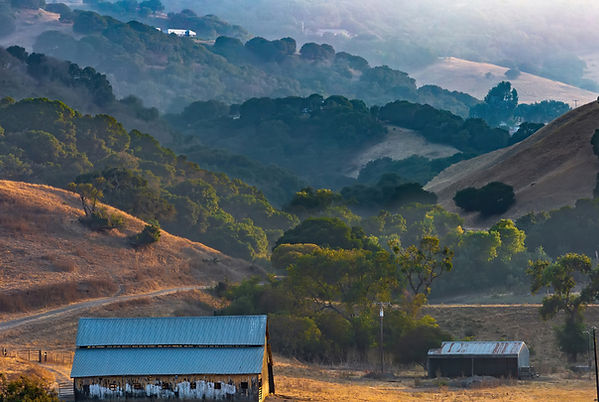
The 586-acre San Antonio Ranch is a critical missing property in a regionally significant wildlife corridor between the Gabilan Range and the Santa Cruz Mountains.
Protecting this ranch would connect Rocks Ranch, Rancho Larios Open Space, and the Nyland property into a 4,245-acre protected landscape that supports the effectiveness of the pending San Benito Wildlife Crossing over Highway 101.
If the land is not permanently protected, it is highly vulnerable to subdivision into ranchettes. That outcome would fragment habitat, weaken wildlife movement, and permanently alter this already constrained landscape.
.avif)

Why This Land Matters
-
Protects a critical gap in a regionally significant wildlife corridor between the Gabilan Range and the Santa Cruz Mountains.
-
Supports the effectiveness of the pending San Benito Wildlife Crossing over Highway 101.
-
Keeps the land in working agricultural use rather than losing it to ranchette subdivision.
-
Creates long-term opportunities for Indigenous land stewardship and community engagement through Ranch Days
Progress So Far
-
The Conservation Fund secured $1.5 million collectively from the Peninsula Open Space Trust and the Wildlife Conservation Network.
-
Bridge financing helped reduce the purchase price and move the acquisition forward.
-
SBALT is continuing to pursue state funding while building visible community support.
-
We have received a generous donation of $25,000 from the Barnet Segal Charitable Trust and thank them for their support.
-
California Strategic Growth Council awarded SBALT $1,161,000.00 toward this purchase on April 29, 2026.
San Benito County General Plan Agricultural Element
The Agricultural Element of the General Plan is a new component of the General Plan that is being developed. Development of the Agricultural Element includes compiling reports regarding soil classification, hydrology, economic analyses, and other relevant factors which will inform the policies of the Ag Element.
This effort is intended to strengthen the County’s support for agriculture, including rangelands, and the long-term viability of the agricultural economy. The reports and the Agricultural Element are expected to include:
-
Identification of intrinsic values of farmland that are of high value in addition to food production.
-
Identifying farmland at risk of conversion or loss.
-
Identifying high priority agricultural lands for conservation.
-
Conservation strategies and approaches.
-
General Plan policies related to agriculture.

This element is being developed as part of the Sustainable Agricultural Lands Conservation (SALC) program, which provides funding to help prevent the conversion of agricultural lands to non-agricultural uses. The goal is to create policies that ensure long-term agricultural productivity, preserve open spaces, and support the local economy. Read more about the Stakeholder Planning Group here:
Ag Element Stakeholder Planning Group | San Benito County, CA
San Benito Wildfire Resilience Program
UC Cooperative Extension, San Benito Agricultural Land Trust, the San Benito Resource Conservation District (RCD), and many other partners recently updated the San Benito Community Wildfire Protection Plan (CWPP). In 2025 we embarded on the development of the Regional Priority Plan (RPP) for San Benito County. Visit the San Benito Wildfire Resilience Program webpage to learn more.

Photo by Bob Connolly
The CWPP serves as a roadmap for prioritizing hazardous fuels reduction and other fire prevention activities to improve community resilience to wildfires. The CWPP also identifies where there is the need for fire to support fire-adapted habitats and Indigenous cultural fire practices. The RPP will recommend a set of priority projects from the CWPP to implement. Having an RPP is a key requirement for continuing and expanding the region’s funding for wildfire mitigation related projects.
This project is funded by a block grant awarded to the State Coastal Conservancy through the California Department of Conservation.